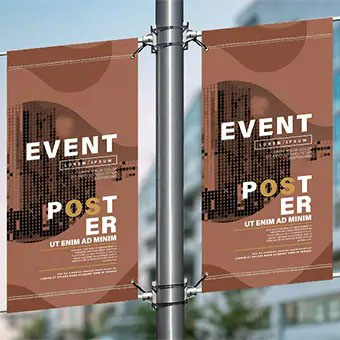
Banner planning
Vinyl, mesh, and fabric banners solve different display problems. A solid surface can give a business message a clear backdrop. An open mesh construction allows air to pass through. A fabric banner provides a textile finish for an indoor event or presentation.
The useful question is how the banner will be used. Compare the setting, viewing distance, mounting arrangement, and artwork before selecting a material. That approach helps you avoid paying for a display that looks suitable online but does not fit its location.
Compare the three materials at a glance
| Material | Useful starting point | Main consideration |
|---|---|---|
| Vinyl | Storefront announcements, business promotions, and indoor signs | A solid sheet catches wind and needs suitable support |
| Mesh | Outdoor fences and locations where airflow matters | The open surface can affect how small details appear |
| Fabric | Indoor events, presentations, and branded displays | Plan around indoor use and the selected care instructions |
On smaller screens, scroll the table sideways to read all columns.
These are practical starting points, rather than promises about weather resistance or lifespan. Installation, exposure, handling, and the selected product all affect how a banner performs.
When vinyl is a useful choice
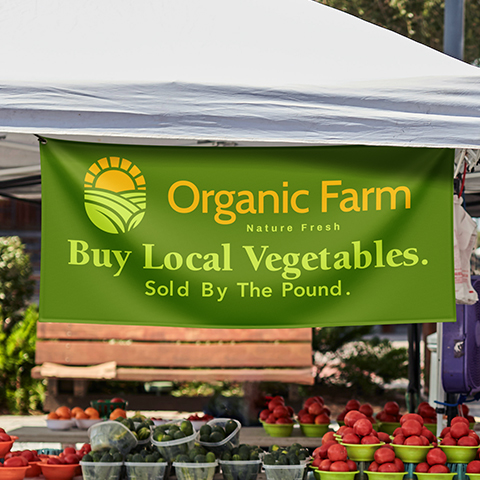
Custom vinyl banners offer a solid surface for lettering, logos, photographs, and background colors. Consider them for a storefront announcement, event welcome message, sale promotion, or indoor wall display.
The solid background can help a short message stand out against a busy setting. It also gives artwork a continuous surface, which is useful when a photograph or logo is important to the layout. Keep the design simple enough for the expected viewing distance.
For outdoor use, plan suitable attachment points and review finishing options. A vinyl banner is not a substitute for a properly designed installation. A large solid sheet can place stress on its mounting points when the wind rises.
When mesh makes more sense
Mesh banners contain openings that allow air through the material. This makes mesh worth considering for fences, sports facilities, construction boundaries, and other outdoor locations with wind exposure.
Airflow can reduce wind pressure compared with a solid sheet, but mesh is not windproof. The support structure, attachment method, banner size, and local conditions still need attention. Follow the hardware guidance and take a display down when conditions exceed its intended use.
Use larger lettering and straightforward graphics on mesh. Tiny captions, fine lines, or a busy photograph may lose clarity because the printable surface contains openings. View the proof at a realistic size before deciding that every detail needs to remain.
When fabric suits the setting
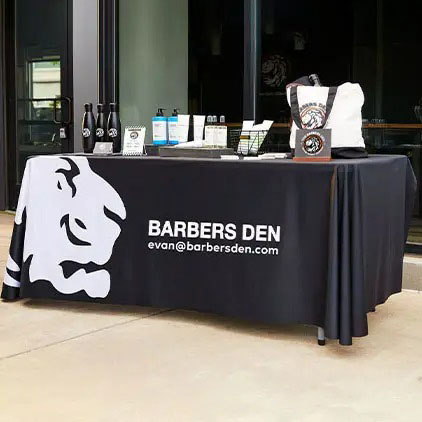
Fabric banners are useful for indoor displays where the surface will be seen up close. Think about conference branding, a presentation area, an indoor celebration, or a display behind a booth.
Fabric offers a different appearance from a solid vinyl sheet, and its lightweight construction can make transport convenient. Keep the design clear, especially when the banner will be photographed. Test the actual lighting rather than assuming any material will eliminate reflections.
For regular outdoor exposure to rain and wind, evaluate vinyl or mesh first. If you plan to use fabric at a short outdoor event, check the selected product's guidance and the weather conditions. Storage and cleaning should follow the instructions for that exact material.
Choose for the artwork as well as the environment
A large headline with a simple logo gives you more flexibility than a design full of tiny text. If the artwork needs close inspection, compare how the surface handles the details and whether the audience will actually stand close enough to see them.
Use a high-quality original image, preserve the logo's proportions, and keep essential text away from finishing areas. For any material, a low-resolution screenshot will remain a poor starting point for a large print. Material selection cannot restore detail missing from the file.
Include finishing and hardware in the decision
Check whether the display requires grommets, pole pockets, a stand, or another mounting method. Review banner accessories and stands alongside the banner, and confirm compatibility with the chosen size and finish.
For a display that needs its own floor-standing base, a retractable banner may be more practical than a loose hanging sheet. Make the display format part of your material decision before finalizing artwork.
Banner material questions
Is mesh better than vinyl outdoors
Mesh is useful when airflow matters, particularly on exposed fences. Vinyl can suit many outdoor announcements. The better choice depends on wind exposure, design detail, size, and the mounting arrangement.
Can fabric banners be used outside
Fabric is a useful starting point for indoor displays. For outdoor use, check the product's guidance and conditions. Repeated rain or wind exposure calls for a different evaluation than a brief fair-weather event.
Does mesh make a banner safe in strong wind
No material makes an installation automatically safe. Mesh allows airflow, but the banner and its supports still need suitable mounting and monitoring during changing conditions.
Which material should I choose for detailed artwork
Compare a solid vinyl surface with fabric for close-viewed graphics, and review the print requirements. For mesh, simplify fine detail and confirm the design remains clear at the intended viewing distance.